State and Local Government AI Summit 2026 Banner

Overview

The Center for Public Sector AI (CPSAI) and the Center for Digital Government is excited to build on our Artificial Intelligence (AI) Summit for state and local government! We are convening state and local government CIOs and AI Leaders along with our private sector partners.

The explosion of artificial intelligence is transforming government operations. As government grapples with how to harness AI’s benefits while minimizing its risks, CIOs need to build trust across multiple stakeholders; navigate ethical, security and privacy concerns; upskill staff to deliver with new technologies; and change long-held processes and practices.

The Summit is an action-packed opportunity to engage with AI Leaders who are leading the way in leveraging AI as a strategic asset at the state, local, department, and agency levels. The goal of the Summit is to create a friendly and engaging environment to build and foster relationships with your peers and the private sector thought leaders.

Stay tuned for more information!

This is an invitation-only event.

A message from our Keynote Speaker

Speakers

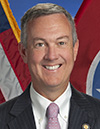
Tre Hargett

Tre Hargett

Secretary of State, State of Tennessee

Tre Hargett was elected by the Tennessee General Assembly to serve as Tennessee’s 37th secretary of state in 2009 and re-elected in 2013, 2017, 2021, and 2025. Secretary Hargett is the chief executive officer of the Department of State with oversight of more than 300 employees. He also serves on numerous boards and commissions, on two of which he is the presiding member. The services and oversight found in the Secretary of State's office reach every department and agency in state government.
Accuracy, cost-effectiveness and accountability drive every decision within the department. Secretary Hargett places a premium on customer service while leveraging technology to create efficiencies that benefit taxpayers with a customer-centered approach to state government.
Under Secretary Hargett’s leadership, the department has implemented a massive overhaul of its technological abilities to embrace customers online. The department offers Tennesseans online voter registration and the GoVoteTN mobile app to help increase voter registration, turnout and awareness.
A redesigned website, found at sos.tn.gov, offers a wealth of information and services, including an intuitive online corporate filing system, a place where consumers can learn how their charitable contributions are being spent and resources to promote civic engagement across Tennessee.
Secretary Hargett was named a Council of State Governments Henry Toll Fellow in 2010, an honor given annually to forty-eight of the nation’s top state government officials. Additionally, he is on the board of directors of the YMCA Center for Civic Engagement, a member of the Union University Advisory Board, as well as chairman of the executive committee of the Republican Secretaries of State Committee (RSSC). Secretary Hargett is also a graduate of the Aspen Institute - Rodel Fellowship Class of 2010. He has also been recognized for his support of National History Day.
More
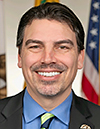
Nikhil J. Deshpande

Nikhil J. Deshpande

Chief Digital & AI Officer, Office of Digital Services & Solutions, Georgia Technology Authority, State of Georgia

Nikhil is a leader in digital transformation, advocating for user-centric, accessible technology. Overseeing Georgia's AI program, he focuses on responsible applications that enhance workforce capabilities and public service. Recognized as a top innovator, he is a sought-after speaker and recipient of multiple awards, including Atlanta Business Chronicle's "40 Under 40." Nikhil holds master’s degrees in Human-Computer Interaction and Visual Communication.
More
Brett Feddersen

Brett Feddersen

Chief Information & Technology Officer, Regional Transportation District, Denver, Colorado

Brett Feddersen is a technology strategist and public sector innovator who serves as Chief Information and Technology Officer for RTD. With more than two decades of experience leading digital transformation, Brett has delivered measurable gains in customer experience, operational efficiency, and organizational agility.
At RTD, he spearheaded the Trans IT ARCHITECTED initiative—raising IT customer satisfaction by 35 points—and coordinated the agency’s technology response during the COVID19 pandemic, ensuring the organization remained connected and able to deliver on its mission throughout an exceptionally challenging period. His earlier leadership at the City of Boulder helped earn national recognition for excellence in digital government.
With graduate training in Strategic Innovation and a reputation for collaborative, mission driven leadership, Brett builds high performing technology teams that turn complex challenges into practical, future ready solutions.
More
Rob Lloyd

Rob Lloyd

Executive Director, Center for Digital Government and Center for Public Sector AI

Prior to joining e.Republic and the Center for Digital Government, Rob served as Chief Technology Officer for the City of Seattle, where he led a 600-person organization with a $310 million technology budget serving 816,000 residents and a 14,000-person workforce. The department's mission: "We put powerful information and tools in the hands of people to unleash brilliance in service to our community."
Rob brings 20 years of C-suite experience across government, utilities, and technology in Washington, California, Arizona, Oregon, and Colorado. He previously served as Deputy City Manager for Transportation, Aviation, and Technology for San José, the nation's 12th largest city and the center of Silicon Valley. His work has advanced AI adoption, public-private partnerships, procurement modernization, and pioneered omnichannel 311. Teams under his leadership have earned more than 50 national honors. He has been recognized as an Governing Magazine Public Official of the Year, GovTech Doers Dreamers & Drivers (twice), ORBIE CIO of the Year (twice), and LocalSmart City Executive of the Year (four times).
More
Sean McSpaden

Sean McSpaden LinkedIn

Principal Legislative IT Analyst & Committee Administrator, Joint Legislative Committee on Information Management and Technology, State of Oregon

Sean has served in Oregon State government for the past 28 years. In the executive branch, he served as Oregon’s Deputy State Chief Information Officer and in the legislative branch serves as Principal Legislative IT Analyst and as Committee Administrator for Oregon’s Joint Legislative Committee on Information Management and Technology. He serves as Oregon’s representative to the National Conference of State Legislatures (NCSL) Taskforce on Artificial Intelligence, Cybersecurity, and Privacy and is a Senior Fellow with the Center for Digital Government and Center for Public Sector AI. He is an author and frequent moderator and speaker for technology-related webinars and state and national forums across the United States. He holds a master’s degree in business administration, is an ISACA Certified Information Security Manager, and holds a Project Management Professional certification from the Project Management Institute.
More
Suma Nallapati

Suma Nallapati

Chief Artificial Intelligence and Information Officer, City and County of Denver, Colorado

Suma is an award-winning global business and technology executive with over 30 years of leadership in digital transformation across healthcare, government, high-tech, and TMT sectors. She currently serves the City and County of Denver in a newly expanded role of Chief Artificial Intelligence and Information Officer, where she leverages data, AI and technology to address some of the city’s most complex challenges, including homelessness.
Nallapati has held senior CXO roles at Fortune 500 companies such as Insight, Dish Network, Everbridge, and TTEC, as well as leadership positions with the State of Colorado and Catholic Health Initiatives (CHI). Her contributions have earned her numerous accolades, including the 2023 Power 50 Women, Top 50 Most Powerful Women in Technology (2019) by the National Diversity Council, and 2018 CIO of the Year by the Colorado Technology Association.
A passionate advocate for diversity, equity, and inclusion in technology, Nallapati actively supports initiatives such as the Blind Institute of Technology, LadyCoders, Girls Who Code, and various Women in STEM programs.
During her tenure as Secretary of Technology and CIO for the State of Colorado, she found her calling in using IT to uplift vulnerable communities. Under her leadership, the state launched MyColorado and other transformational digital platforms that improved resident experience and service delivery.
She continues to champion AI and digital innovation as a key leader in Mayor Mike Johnston’s administration, where she leads several transformative initiatives, including the DenAI Summit.
Nallapati holds a Master’s degree in Nuclear Physics and a Chief Digital Officer Certification from the Kellogg School of Management, where she now serves as an executive advisor to their Digital and AI Leadership Series. A proud Colorado resident for over 30 years, she remains deeply committed to public service and technological innovation for social good.
More
Craig P. Orgeron CPM, Ph.D.

Craig P. Orgeron CPM, Ph.D.

Executive Director/CIO, Department of Information Technology Services, State of Mississippi

Craig has extensive information technology experience in both the private sector and the federal and state level of the public sector. Currently, Dr. Orgeron serves as the Executive Director of the Mississippi Department of Information Technology Services and Chief Information Officer (CIO) for the State of Mississippi, a role he held previously for nearly a decade. In this role, Dr. Orgeron provides statewide leadership in the provision of services that facilitates cost-effective information technology and telecommunication solutions for Mississippi government agencies and institutions.
Dr. Orgeron began his career as a communications-computer systems officer in the United States Air Force. He has served as an Executive Government Advisor with Amazon Web Services (AWS), President of the National Association of State Chief Information Officers (NASCIO) and on the Executive Committee of the Multi-State Information Sharing & Analysis Center (MS-ISAC), as well as participated in numerous government information technology task forces and committees, such as the Mississippi Broadband Task Force, the Digital Signature Committee, the Electronic Government Task Force, and the Governor’s Commission on Digital Government, which led to the implementation of the enterprise electronic government in Mississippi. Dr. Orgeron holds a bachelor’s degree in MIS, a master’s degree and doctorate in public policy and administration from Mississippi State University.
Dr. Orgeron is a certified public manager and a graduate of the Senator John C. Stennis State Executive Development Institute, as well as the Institute on International Digital Government Research, the Harvard University, John F. Kennedy School of Government Executive Education Series, Leadership for a Networked World, Cybersecurity: The Intersection of Policy and Technology, Leading in Artificial Intelligence: Exploring Technology and Policy, and the Harvard Business Analytics Program (HBAP).
More
Sabra Schneider

Sabra Schneider

Chief Information Officer, City of Bellevue, Washington

Sabra serve as the CIO for the City of Bellevue, community recognized for its strong digital governance and consistent top-tier performance in national digital city rankings.
With more than two decades of experience in public-sector innovation, Sabra Schneider has worked at the intersection of technology, communications, data, and transparency, helping government organizations modernize services, strengthen engagement, and responsibly integrate emerging technologies to deliver better services. 
Before joining Bellevue, Sabra led digital engagement for the City of Seattle and guided web, social media, digital communications, and open data programs for King County, Washington. Earlier in her career, she was a tenured faculty member at South Seattle College, where she developed and led the web design and development program. She is also an occasional adjunct instructor at the University of Washington’s Evans School of Public Affairs.
She holds a Bachelor of Arts from the University of California, Santa Cruz, and a Master of Public Administration from the University of Washington.
Throughout her career across local government and academia, teams under her leadership have earned numerous recognitions for innovation, digital services, communications, equity, and public engagement. Sabra’s honors include the Seattle ORBIE CIO of the Year, Government Technology’s Top 25 Doers, Dreamers, and Drivers, Constellation Research’s AI150, the Dan Evans Award for Teaching and Technology Innovation and the NISOD Teaching and Leadership Excellence Award.
More
Chris Seidt

Chris Seidt

Director of Information Technology, Louisville Metro Government, Kentucky

Teri Takai

Teri Takai

Chief Programs Officer, Center for Digital Goverment

Teri Takai is the Chief Programs Officer for the Center for Digital Government, a national research and advisory institute on information technology policies and best practices in state and local government. Teri worked for Ford Motor Company for 30 years in global application development and information technology strategic planning. From Ford, she moved to EDS in support of General Motors. A long-time interest in public service led her to the government sector, first as CIO of the State of Michigan, then as CIO of the State of California and, subsequently, the CIO of the U.S. Department of Defense, the first woman appointed to this role. She then served as the CIO for Meridian Health Plan. .
Teri is a member of several industry advisory boards. She has won numerous awards including Governing magazine’s Public Official of the Year, CIO Magazine’s CIO Hall of Fame, Government Technology magazine’s Top 25 Doers, Dreamers & Drivers, the Women in Defense Excellence in Leadership Award and the Department of Defense Medal for Distinguished Public Service.
More
Mark Wittenburg

Mark Wittenburg

Chief Information Officer, City of Raleigh

Mark Wittenburg is the Chief Information Officer for the City of Raleigh. Mark has extensive public sector experience working with city and regional leaders in Arizona and now North Carolina to develop strategic direction and manage IT operations. His knowledge helped advance initiatives such as deploying smart water meters to conserve water, advancing regional digital equity by accelerating 5G and fiber installation, and building a culture that embraces innovation. Mark brings that same passion for public service to Raleigh, leveraging thoughtful and appropriate technology to advance the priorities of the community.
More

Agenda

Wednesday, August 19

6:00 pm Pacific

Summit Dinner

Thursday, August 20

7:30 am Pacific

Registration and Breakfast

8:30 am Pacific

Welcome and Introductions

Rob Lloyd, Executive Director, Center for Digital Government

Teri Takai, Chief Programs Officer, Center of Digital Government

9:00 am Pacific

Keynote: Unleashing People. Keeping Trust. Building the Future

9:30 am Pacific

AI and Build Versus Buy— Hard Truths, Strategic Tradeoffs, and Will It Work?

As enterprise AI adoption accelerates, technology leaders face intriguing questions: should organizations build their own software to replace the commercial solutions they’ve moved to strategically for decades? Is a hybrid approach the answer? Why can’t it be straightforward?

Let’s cut through the hype to examine the real-world viability of enterprise AI strategies, from custom development and internal AI libraries to commercial platforms and managed frameworks. CIOs, digital leaders, and industry partners will share where organizations are seeing some success, where expectations are outpacing reality, and why AI is not a universal fit for every business function or operational environment.

Key considerations include compliance and governance constraints, mission-critical limitations, release and support frameworks, talent and operational readiness, and long-term implications of maintaining tool-built AI ecosystems.

Moderator: Rob Lloyd, Executive Director, Center for Digital Government

Tim Marczewski, Director of AI and Innovation, State of Missouri

Chris Seidt, Director of Information Technology, Louisville Metro Government, Kentucky

Mark Wittenburg, Chief Information Officer, City of Raleigh, North Carolina

10:15 am Pacific

Break

10:30 am Pacific

Small Bets, Key Decisions, Redesigning Our Teams

Enterprise transformation comes as a single sweeping initiative. Organizations making meaningful progress in AI are seeing a mix of organizational, change, and technical considerations: placing strategic small bets, learning quickly, using insights to reshape services, looking at how to reshape whole operating models, and considering their workforce structures.

This panel will explore how CIOs and enterprise leaders are moving from isolated pilots to sustainable, enterprise-scale transformation. As AI adoption accelerates, organizations must rethink not only technology architecture, but also how security, privacy, cloud operations, governance, and product delivery teams work together. What is in the future for AI officer, data officer, privacy officer, and technology officer roles?

As CIOs and CISOs realign, they are confronting difficult questions around organizational design, leadership accountability, technical role evolution, and long-term operational sustainability.

Moderator: Teri Takai, Chief Programs Officer, Center for Digital Government

Brett Feddersen, Chief Information & Technology Officer, Regional Transportation District, Denver, Colorado

Suma Nallapati, Chief Artificial Intelligence & Information Officer, City and County of Denver, Colorado

11:15 am Pacific

Communities of Practice That Work— Building Safe, Collaborative AI Ecosystems

As productive AI adoption accelerates, organizations increasingly recognize they cannot navigate the opportunities and risks alone. Consortiums, coalitions, peer networks, and public-private partnerships are emerging to help stakeholders share lessons, establish guardrails, reduce duplication, and create safer pathways for experimentation and innovation.

This session explores which AI communities of practice are delivering real value, how partnerships are accelerating learning and governance maturity, and what separates productive collaboration from performative participation. Leading governments and industry partners will share how coalition models supporting responsible experimentation, workforce readiness, policy alignment, and scalable innovation without creating unacceptable risk. And how old compliance models are failing the moment of AI speed and scale.

Panelists will share practical approaches to building safe environments for AI testing and knowledge-sharing, including governance frameworks, partnership structures, shared evaluation models, and collaboration strategies—along with candid lessons on what is not working and what consortiums are meeting the needs of the moment.

Moderator: Rob Lloyd, Executive Director, Center for Digital Government

Tre Hargett, Secretary of State, State of Tennessee

Craig P. Orgeron, Ph.D., CPM, Executive Director/CIO, Department of Information Technology Services, State of Mississippi

Sabra Schneider, Chief Information Officer, City of Bellevue, Washington

12:00 pm Pacific

Lunch

1:00 pm Pacific

AI Tradeoffs: What Matters Most?

A kinetic exercise where attendees will connect on approaches, similar interests, priorities, and urgencies.

Facilitator:

Rob Lloyd, Executive Director, Center for Digital Government

1:30 pm Pacific

AI-Ready Infrastructure: Building What Will Deliver

Governments are moving from AI experimentation to AI operations.

Technology stacks and infrastructure must keep up. Cloud architecture,

data pipelines, integration layers, and enterprise platforms are coming

from different eras.

Leaders are now making long-term bets on modernization while managing budget constraints, overlapping legacy portfolios, and the requirements of secure, resilient, and responsive services to support what comes. Getting the stack right is no longer a future problem. It is the current one.

As AI is moving from answering to assisting to acting and controlling. Solutions are routing cases, triggering workflows, querying live systems, and will impact decisions with human oversight and correction. Research finds most governments have already adopted AI agents in some form. Few have put in the governance and observability needed. This session brings together the leaders building both: the infrastructure foundations and the frameworks that make AI something people can use and trust.

Moderator: Rob Lloyd, Executive Director, Center for Digital Government

Nikhil Deshpande, Chief Digital & AI Officer, Office of Digital Services & Solutions, Georgia Technology Authority, State of Georgia

2:15 pm Pacific

Break

2:30 pm Pacific

Building With, Not Just Deploying: Trust, Co-Creation, and Accountability in the AI Era

As governments expand the use of AI agents, robotic vision, automation, and intelligent services, trust has emerged as the defining requirement for adoption. Staff need confidence that their organization is deploying technology responsibly. Communities and constituencies demand their governments protect their public interests. And organizations must trust that partners and vendors are operating transparently, securely, and accountably.

This session moves beyond privacy checklists and frameworks toward something more useful but harder: collaborative trust-building when it is designed into the life of an initiative. Leaders will share perspectives on trust infrastructure as an operational approach and how they are building differently to meet the need. Audience breakouts will engage on shaping use of AI with the values of the people the technology is meant to serve.

Moderator: Teri Takai, Chief Programs Officer, Center for Digital Government

Sean McSpaden, Principal Legislative IT Analyst & Committee Administrator, Joint Legislative Committee on Information Management and Technology, State of Oregon

3:15 pm Pacific

Open Forum: What Does Success Look Like?

3:45 pm Pacific

Closing Remarks and Next Steps

Rob Lloyd, Executive Director, Center for Digital Government

Teri Takai, Chief Programs Officer, Center of Digital Government

4:00 pm Pacific

Summit Adjourns

Conference times, agenda and speakers are subject to change.

Hyatt Regency Huntington Beach

21500 Pacific Coast Highway
Huntington Beach, CA 92648
7146981234

Get Directions To
Hyatt Regency Huntington Beach

Registration Information / Contact Us

Event Date: August 19 and 20, 2026

This is an invitation-only event, open to Public Sector only. For more information or to request an invitation, please contact Isabel McKee.

Sponsorship is open to Industry members of the Artificial Intelligence Council Program only. To learn more about becoming an Industry member, please contact Heather Earney.

Contact Information

Need help registering, or have general event questions? Contact:

Isabel McKee
Center for Digital Government
A division of e.Republic
Phone: (916) 932-0722
E-mail: imckee@erepublic.com

Already a sponsor, but need a hand? Reach out to:

Mireya Gaton
Center for Digital Government
A division of e.Republic
Phone: (916) 296-2617
E-Mail: mgaton@govtech.com

Sponsorship is open to Industry members of the Artificial Intelligence Council Program only. To learn more about becoming an Industry member, please contact:

Heather Earney
Center for Digital Government
A division of e.Republic
Phone: (916) 932-1339
E-mail: heather.earney@erepublic.com

Venue

Hyatt Regency Huntington Beach

21500 Pacific Coast Highway
Huntington Beach, CA 92648
7146981234