Michigan Cyber Summit 2026

Overview
Leading the charge in cybersecurity resilience.
The Michigan Cyber Summit returns as a premier gathering of 600+ cybersecurity leaders and innovators from across the public and private sectors. Hosted in partnership with the Michigan Department of Technology, Management and Budget (DTMB), this summit explores the strategies, technologies, and partnerships that are keeping Michigan at the forefront of cyber defense. From leveraging federal resources to navigating emerging threats, attendees gain practical insights to strengthen preparedness, accelerate response, and protect what matters most.
We are excited to host yet another Michigan Cyber Summit. This event brings technology leaders and professionals across public and private sectors, offering a chance to build connections and explore how we can collaborate to protect the people of our state. The event will cover a wide range of topics and include opportunities to network, ensuring that we do our part to make cybersecurity easier for users and harder for hackers.
– Rex Menold, Chief Security Officer, Michigan Department of Technology, Management & Budget
The 2026 Michigan Cyber Summit brings the opportunity for us to connect with cybersecurity professionals on a variety of key topics, including new technologies, emerging threats, and ways to better secure the entire digital ecosystem. Cybersecurity is constantly evolving, and we need to make sure we continue keeping Michigan’s residents and data secure.
– Eric Swanson, Acting Chief Information Officer, Michigan Department of Technology, Management & Budget
This is DTMB’s 15th year hosting the Michigan Cyber Summit, and this year’s event promises to be a great one. Michigan has long been a leader in cybersecurity, and this event brings professionals across the globe together to ensure Michigan’s cyber posture remains strong. Experience a full day of learning, collaboration, and conversation while diving into cybersecurity discussions designed to find ways to better secure our great state.
- Kyle Guerrant, DTMB acting director
Speakers

Caleb Buhs

Chief Deputy Director, Department of Technology, Management and Budget, State of Michigan
Driven by a passion for public service, Buhs has spent nearly two decades working to improve government services for the benefit of all Michiganders. As a member of DTMB’s leadership team, he helps foster a culture of engaged employees to ensure the delivery of outstanding customer service, areas in which DTMB has consistently exceeded national benchmarks.
Buhs began his public service career with the State of Michigan in 2004 and has served as the public information officer and economic development advisor for the Department of Insurance and Financial Service, deputy press secretary for the governor, and communications specialist for the Department of Treasury. Prior to being named chief deputy director, he served more than eight years as the communications director for DTMB.
Buhs holds a bachelor’s degree in integrative public relations from Central Michigan University. He maintains an active presence in his community, serving as a school board member for Charlotte Public Schools, including two terms as president, and having coached numerous youth sports teams.




.jpg)

Troy Cogburn
Innovation Principal, Trace3

Ted Cotterill
Cybersecurity, Digital Trust and Ecosystems, Accenture
Cotterill helps organizations build digital trust as a foundation for innovation. His practice spans cybersecurity, privacy, governance, regulatory compliance, and ethics, with particular emphasis on the responsible use of data across AI, cloud platforms, complex technology partnerships, and product development.
He has been appointed to several high-profile policy roles, including as the State Senate’s lay appointee to the Indiana AI Task Force and in service to the GovRAMP Steering Committee on behalf of Accenture. Previously, Cotterill served as a gubernatorial appointee to the Indiana AI Task Force and as a member of the Council of State Governments’ Healthy States National Task Force. His contributions have earned recognition as a Top 25 Doer, Dreamer & Driver by GovTech and a recipient of the Indiana Lawyer’s Leadership in Law Award in 2022.
Cotterill holds a Juris Doctor from the Indiana University McKinney School of Law, is a licensed attorney in the State of Indiana, and is recognized by the International Association of Privacy Professionals (IAPP) as a Certified Information Privacy Professional (CIPP/US), Certified Information Privacy Manager (CIPM), and Fellow of Information Privacy (FIP).




Jeff Hoffman
Detective Lieutenant, Michigan Cyber Command Center, Michigan State Police
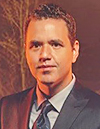



Richard Korn
Senior Solution Specialist, Comcast Business
Rich has experience in the following areas: Internet, Wide Area Networks, Voice, Co-location, Cloud, Managed Services, and Security. Rich has been published on such topics as VoIP, MPLS, SD-WAN, SASE, and Security. He has also filled roles in Leadership and Training/Development.




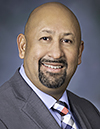


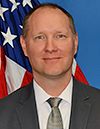





Nathan Willigar
Chief Security Advisor, Microsoft
Previously, he was the Chief Information Security Officer for the State of Maine, overseeing the security of the State’s IT infrastructure. Over more than six years, he strengthened Maine’s cybersecurity posture by maturing its security program, protecting citizen data, and supporting agency missions through tailored IT solutions. He collaborated closely with state and federal partners to identify threats, mitigate risk, and enhance enterprise-wide security capabilities.
Mr. Willigar served on the Maine Cyber Security Advisory Council and MS-ISAC. He holds a CISM, an MBA from Thomas College, a BA from Husson College, and completed the FBI CISO Academy.


Agenda
Thursday, October 15 |
|
8:00 am Eastern |
Registration and Morning Refreshments in the Exhibit AreaDiamond Foyer + Platinum Ballroom |
9:00 am Eastern |
Welcome and Opening RemarksDiamond BallroomCaleb Buhs, Chief Deputy Director, Michigan Department of Technology, Management & Budget |
9:15 am Eastern |
Keynote – Strengthening the Shield: Insights from the Trenches of National SecurityDiamond BallroomThere’s no question - public-sector leaders must continue to strengthen their cyber hygiene, foster cross-sector partnerships, and adapt to the evolving threat landscape. Join Rachel Wilson, former NSA cyber operations leader, for an engaging and action-driven keynote that bridges real-world cybersecurity expertise with the challenges of emerging technologies. Drawing on her experience safeguarding critical systems, Rachel explores the heightened risks posed by AI-enabled threats like ransomware, insider attacks, and credential exploitation. This session is a call to action for everyone, from CIOs to frontline technologists, to embrace a proactive and resilient approach to protecting critical assets in the age of AI.
Rachel Wilson, Managing Director and Chief Data Officer, Morgan Stanley Wealth Management and Former NSA Senior Executive |
10:15 am Eastern |
Networking Break in the Exhibit AreaPlatinum Ballroom |
10:40 am Eastern |
Concurrent SessionsWhen Machines Get Credentials: Securing Agents and Non-Human IdentitiesLegacy 1Artificial intelligence agents, automated services, application programming interfaces, bots, and service accounts are quickly becoming active participants in everyday operations. Unlike traditional users, these identities can act continuously, move at machine speed, and sometimes make decisions without waiting for direct human approval. This session examines how organizations of all sizes can authenticate, authorize, monitor, and contain non-human identities before automation expands beyond their control. Speakers will explore practical safeguards, ownership expectations, access limits, infrastructure requirements, and the warning signs that an agent may be behaving in an unexpected or unsafe way.
Moderator: Art Thompson, Chief Information Officer, Department of Innovation and Technology, City of Detroit Troy Cogburn, Innovation Principal, Trace3 Thomas Holt, Ph.D., Professor, Director of Masters Degree Programs, Director of the Center for Cybercrime Investigation and Training, School of Criminal Justice, Michigan State University Andrew Sczygielski, Supervisory Special Agent of the Cyber Task Force, FBI Detroit Field Office The Art of the Cyber Story: Making Incidents UnderstandableLegacy 2Every cyber incident has a technical story, but the details alone do not always help leaders, employees, customers, or the public understand what happened. This session will examine how organizations can clearly explain the attack path, the technology involved, the decisions made, and the lessons learned without creating unnecessary fear or confusion. Speakers will use real or anonymized examples to show how a strong incident narrative can support leadership decisions, insurance conversations, employee awareness, public communication, and future preparedness. The session will also explore how storytelling can help people recognize that they are part of the security process, not simply the audience for another annual training.
Richard Korn, Senior Solution Specialist, Comcast Business Brian Pillar, IT Project Delivery Officer and Operations General Manager, Department of Technology, Management and Budget, State of Michigan Cybercrime Meets Automation: Responding When Attackers Move FasterLegacy 3Attackers increasingly use automation and AI to scale cyberattacks, while everyday devices continuously emit digital signals that can announce vulnerabilities or reveal our movements. We will dive into the risk of digital exhaust and ubiquitous signals. A live signal‑tracking demonstration will highlight the importance of understanding the data we unknowingly broadcast each day. We will discuss when organizations should escalate incidents or seek outside assistance. This session brings together cybersecurity and law enforcement perspectives to examine emerging criminal tactics, practical uses of artificial intelligence, evidence preservation, escalation paths, and when to call for outside assistance.
Jeff Hoffman, Detective Lieutenant, Michigan Cyber Command Center, Michigan State Police Jake Roys, Information Technology Specialist Michigan Cyber Command Center, Michigan State Police Privacy and Security at the Same TableLegacy 4Security teams need access to information to identify risk, investigate activity, and protect services. Privacy teams must ensure that information is collected, retained, shared, and used responsibly. Those goals do not have to conflict. This session explores how privacy and security professionals can make decisions together, particularly when evaluating artificial intelligence tools, reviewing retention policies, monitoring activity, conducting investigations, or introducing new data-driven services. The conversation will focus on finding responsible paths forward instead of defaulting to either unrestricted access or an automatic no.
Moderator: Ruth Archer, Chief of Staff, Center for Data and Analytics, Department of Technology, Management, and Budget (DTMB), State of Michigan Jamie Bennett, Deputy Chief Security Officer, Department of Technology, Management, and Budget (DTMB), State of Michigan Bari Wood, Chief Privacy Officer, Department of Technology, Management, and Budget (DTMB), State of Michigan From Alert to Playbook: Practical Artificial Intelligence for Cyber DefendersLegacy 5Artificial intelligence can support cyber operations without replacing human judgment. This practical discussion will look at realistic ways defenders can use it to organize incident information, draft response playbooks, improve documentation, summarize technical findings, accelerate handoffs, and identify gaps in existing procedures. Speakers will also address where human review remains essential, what information should not be entered into external tools, and how to test outputs before they become part of an operational process.
Jeremy Hunt, Cybersecurity Architect, Cybersecurity and Infrastructure Protection, MiSOC, Michigan Department of Technology, Management & Budget, State of Michigan Benjamin Scott, Director, Critical Infrastructure and Operational Technology, US Public Sector, Fortinet Building a Security Function When Resources Are LimitedLegacy 7A mature cybersecurity program rarely appears all at once. It is built one decision, one relationship, and one control at a time. Designed for small businesses, nonprofit organizations, local governments, schools, and other organizations with limited staff, this session will explain how to establish a practical security function from the ground up. Topics will include identifying the most important services, setting achievable priorities, using shared resources and available contracts, documenting responsibilities, creating a basic incident process, and improving protection without requiring a large security department.
Tarek Sasy, Dark Web Intelligence Analyst, Cyber Section Michigan Cyber Command Center, Intelligence Operations Division, Michigan State Police Greg Sieg, Chief Information Security Officer, Regional Health Network, Michigan Medicine, University of Michigan |
11:25 am Eastern |
LunchDiamond Ballroom |
12:25 pm Eastern |
General Session – Beyond Siloed Security: An Agile Model for AI, OT, and Post Quantum RiskDiamond BallroomAI risk, operational technology (OT) risk, and quantum risk are typically managed as three separate efforts, with different owners and timelines. In practice they converge on the same assets and with overlapping timeframes. AI has compressed attack timelines from days to minutes and is increasingly pointed towards physical control environments, while the transition to post-quantum cryptography sets a deadline against data that must remain confidential for years. This session examines why traditional, siloed approaches struggle, and presents an agile, NIST CSF 2.0–aligned model for governing all three risks together.
Dr. Colin Soutar, Managing Director, Deloitte |
1:25 pm Eastern |
Short BreakPlease proceed to the concurrent sessions.
|
1:50 pm Eastern |
Concurrent SessionsThe Quantum Deadline: Preparing Your Organization for Post-Quantum SecurityLegacy 1Quantum computing may still feel distant, but the transition to post-quantum cryptography cannot wait until a cryptographically relevant machine arrives. Organizations must first locate where encryption is used, understand which systems and contracts will be affected, and prepare for changes that may increase processing requirements, complexity, and cost. This session will examine how businesses, public agencies, schools, healthcare organizations, and nonprofit organizations can begin building a cryptographic inventory, evaluate vendor readiness, introduce post-quantum requirements into purchasing decisions, and plan around federal transition timelines. The goal is not to predict the exact arrival of quantum computing, but to ensure today’s technology decisions do not become tomorrow’s emergency.
Moderator: Rex Menold, Chief Security Officer, Department of Technology, Management & Budget, State of Michigan Heather Frick, Director, Agency Services, Department of Technology, Management, and Budget (DTMB), State of Michigan Manny Rosales, Chief Technology Officer, Department of Technology, Management, and Budget (DTMB), State of Michigan Dr. Colin Soutar, Managing Director, Deloitte Beyond the Patch Cycle: Reducing Risk Across the Technology Supply ChainLegacy 4Patching is essential, but it is not as simple as applying every update the moment it appears. Organizations must weigh urgency, testing, system availability, vendor trust, operational impact, and the possibility that a compromised update could introduce new risk. This session explores how to build a more disciplined vulnerability and patch management process that works across organizations of different sizes and industries. Speakers will discuss asset visibility, prioritization, exception handling, third-party dependencies, and how to avoid the slow accumulation of unresolved weaknesses that can eventually lead to a major incident.
Jason Frost, General Manager Infrastructure and Architecture, Department of Technology, Management, and Budget (DTMB), State of Michigan Ready for Disruption: Building a Resilient OrganizationLegacy 3Cyber resilience begins with accepting that even well-protected organizations may experience disruption. The real question is whether critical services can continue, teams can adapt, and recovery can begin without creating additional harm. This session will focus on the operational effects of an incident, including unavailable systems, disrupted communications, vendor dependencies, delayed services, and difficult decisions about what must be restored first. Speakers will share practical lessons from real situations, explain how organizations can develop a resilient mindset, and discuss how exercises, clear responsibilities, and realistic recovery plans help teams respond when conditions do not match the original playbook.
J. Wolfgang Goerlich, Chief Information Security Officer, Information Technology, Oakland County Ryenn White, Red Team Consultant, Google The Cyber Workforce Pivot: Skills That Will Matter NextLegacy 2Automation and artificial intelligence are changing how cybersecurity work is performed, but they are not eliminating the need for skilled people. Tomorrow’s professionals will need to interpret machine-generated findings, challenge automated recommendations, communicate risk, understand operations, and make sound decisions when technology cannot provide a complete answer. This session will explore how cyber roles are evolving, which skills are gaining importance, and how Michigan employers can continue developing entry-level talent even as routine tasks become automated. The discussion will also address certifications, continuous learning, college recruitment, career transitions, and the shared responsibility to build a workforce prepared for the next generation of security work.
Moderator: Stephanie Jeppesen, State Administrative Manager, Business Services, Department of Technology, Management, and Budget (DTMB), State of Michigan Kristen Aldrich, Chief of Staff to the CTO, Department of Technology, Management, and Budget (DTMB), State of Michigan Nathan Willigar, Chief Security Advisor, Microsoft Buying Securely: Funding, Contracts, and the Questions That MatterLegacy 5Cybersecurity decisions are often shaped by funding rules, contract language, legal requirements, grant restrictions, and purchasing timelines long before a tool is implemented. This session brings together security, finance, procurement, legal, and grants perspectives to explain how organizations can make stronger purchasing decisions. Panelists will discuss how to define security expectations, evaluate ongoing costs, confirm allowable uses of funding, assess cooperative purchasing options, and require vendors to provide meaningful evidence rather than general assurances. The session will help technical and business teams understand what each side needs to move a secure investment forward.
Moderator: Dan Lohrman, Senior Fellow, Center for Digital Government Kara Ortiz, Director Identity and Architecture, Department of Technology, Management and Budget (DTMB), Cybersecurity and Infrastructure Protection, State Police Headquarters, State of Michigan Simon Baldwin, Category Director IT, Central Procurement Enterprise Sourcing, Department of Technology, Management, and Budget (DTMB), State of Michigan Alexander Root, Assistant Attorney General, Office of the Attorney General, State of Michigan Government Risk and Authorization Management Program Without the GuessworkLegacy 7Cloud security assurance programs can help organizations evaluate risk, but only when leaders understand what a certification or authorization actually covers. This session will provide a practical introduction to the Government Risk and Authorization Management Program, formerly the State Risk and Authorization Management Program. Speakers will explain how the verification model works, what different statuses indicate, and how those designations can support vendor evaluation. The discussion will also examine Michigan’s position, the questions buyers should still ask, and why participation in an assurance program should inform due diligence rather than replace it.
Moderator: Wayne Aldrich, State Division Admin XVII, Cybersecurity and Infrastructure Protection, Department of Technology, Management, and Budget (DTMB), State of Michigan Ted Cotterill, Cybersecurity, Digital Trust and Ecosystems, Accenture Marshall Howard, State Division Administrator, OCTO IHA Cloud and Infrastructure Delivery, Department of Technology, Management & Budget (DTMB), State of Michigan |
2:35 pm Eastern |
Networking Break in the Exhibit AreaPlatinum Ballroom |
3:00 pm Eastern |
General Session – Securing the Agentic Enterprise: Navigating the Next FrontierDiamond BallroomTroy Cogburn, Innovation Principal, Trace3 Jon Ford, Director, Google Public Sector |
4:00 pm Eastern |
Closing RemarksDiamond Ballroom |
4:15 pm Eastern |
Networking Reception in the Exhibit AreaPlatinum BallroomNetwork with your colleagues and discuss technology solutions with the event exhibitors.
|
5:00 pm Eastern |
End of ConferenceConference times, agenda, and speakers are subject to change.
|
Vibe Credit Union Showplace
46100 Grand River Ave
Novi, MI 48374
(248) 348-5600
Vibe Credit Union Showplace
Advisory Board
Government Representatives
Daniel Ayala
Managing Partner
Secratic LLC
Jamie Bennett
Deputy Chief Security Officer
Department of Technology, Management & Budget
State of Michigan
Caleb Buhs
Chief Deputy Director
Department of Technology, Management & Budget
State of Michigan
Nicole Bushong
Senior Executive Management Assistant
Department of Technology, Management & Budget
State of Michigan
Donna Davis
Secretary/Treasurer
Michigan CyberPatriot Program
Danielle Davis
Senior Executive Management Assistant
Department of Technology, Management & Budget
State of Michigan
Jack Drew
Director
Michigan State Police, Michigan Cyber Command Center
State of Michigan
Tiziana Galezzi
General Manager
Department of Technology, Management & Budget
State of Michigan
Shelley Jeltema
Assistant Professor CIT / Ceospatial Sciences
Lansing Community College
Stephanie Jeppesen
State Administrative Manager, Business Services Unit, Cybersecurity and Infrastructure Protection
Department of Technology, Management & Budget
State of Michigan
Michelle McClish
State Assistant Administrator and CIP External Engagement Lead
Department of Technology, Management & Budget
State of Michigan
Rex Menold
Chief Security Officer
Department of Technology, Management & Budget
State of Michigan
Brian Pillar
General Manager
Department of Technology, Management & Budget
State of Michigan
Manny Rosales
Chief Technology Officer
Department of Technology, Management & Budget
State of Michigan
Michael Sauer
Director
UP Cybersecurity Institute
Northern Michigan University - UP
Megan Schrauben
MiSTEM Executive Director
Law Enforcement
State of Michigan
Andrew Sczgielski
Supervisory Special Agent
Cyber Criminal Squad, CY-16
FBI Detroit Cyber Task Force
Eric Swanson
Chief Information Officer (Acting)
Department of Technology, Management & Budget
State of Michigan
Cheryl Wilson
Computer Science Consultant
Department of Education
State of Michigan
Ulrika Zay
State of Michigan
Industry Representatives
Tammie Buehler
Client Director
Trace3
Hugh Carroll
VP, Corporate Affairs
Fortinet
Kerry DeBano
Client Relationship Executive
Deloitte
Miguel Mickey
Account Executive
Microsoft














Registration Information / Contact Us
Event Date: October 15, 2026
Registration is open to professionals from the public, private and nonprofit sectors.
Registration Fees:
State of Michigan Employees: Free
Local Government & Non-Profit: $80.00
College Students: $50*
*Students must register with school issued email for verification.
Industry Registration Fee: $95.00**
**Companies providing IT or cybersecurity services in the government technology space are only eligible to attend under an event sponsorship. Private sector attendees must register using their company-issued email for verification.
If you represent a Private Sector organization and are interested in Sponsorship Opportunities, please contact Heather Earney.
This event is open to all individuals who meet the eligibility criteria, without regard to race, color, religion, gender, gender identity, age, disability, or any other protected class. We are committed to fostering an inclusive and welcoming environment for all participants.
Contact Information
Need help registering, or have general event questions? Contact:
Sherri Tidwell
Government Technology
A division of e.Republic
Phone: (916) 932-1382
E-mail: stidwell@erepublic.com
Already a sponsor, but need a hand? Reach out to:
Mireya Gaton
Government Technology
A division of e.Republic
Phone:(916) 296-2617
E-Mail: mgaton@erepublic.com
Want to sponsor and stand out? Reach out to explore opportunities!
Heather Earney
Government Technology
A division of e.Republic
Phone: (916) 365-2308
E-mail: heather.earney@erepublic.com